Showing posts with label monster. Show all posts

Thursday, August 2, 2018

Ghuleh, Ghuleh

Putrefaction
A scent that cursed be
Crawler from The Descent (2005)

Under cold dark dust
From the darkness
Rise a succubus
From the earthen rust

- Ghost, "Ghuleh / Zombie Queen"

Ghul
No. Enc.: 1d8 (1d6x10)
Movement: 120' (40')
Armor Class: 6 (hide)
Hit Dice: 2+2, or 6 (rais)
Attacks: 1
Damage: 1d8 (claws) or weapon
Save: F3, F6 (rais)
Morale: 9, 11 (rais)
Exp: 58, 820 (rais)

Hoard Class: IV (individual), XIV (group)

Hideous Regeneration: The first wound a ghul suffers in a combat will cause the ghul to take an additional 1 hp damage each round. However, if the the ghul is struck again, its jinn heritage will begin healing all of its wounds with diabolical speed; it will regenerate 1d10 hp per round for the rest of the day.

Rad-touched: Ghuls are immune to the effects of anomalies and other features of the Zone. 

Ghuls are mutants of the jinn - descendants of those trapped in the Zones and twisted by the horrid magicks of the Bieth. Twisted faces (always sporting twisted tusks), never-healing radiation burns, and withered limbs distort their forms. Confined to their warped and twisted physical forms, they are disdained by their jinn brethren, and feared by human city-dweller and nomad alike. Cast out from all society, pushed to the wastelands and ruins, ghuls regularly turn to banditry and slaughter to survive. Given their residence in the ruined and hollowed cities of the Zones, and the inhospitable nature of the wastes, many believe that they subsist on the vast necropolises and the corpses stored within. 

Despite their ill reputation, many ghuls dream of leaving their blasted homes and joining the societies they have dimly heard of. Given their immunities to the deleterious effects of the Zone and the perilous anomalies, ghuls will occasionally strike up relationships and even alliances with those striking out into the Zone. However, they are wary and paranoid, and many an alliance has been riven apart through betrayal and fear on both sides. 

Ghul bands of 20 or more have a 4 in 6 chance of being led by a rais (boss), a 6 HD ghul who can polymorph self (AEC 73) into any humanoid form three times a day. They are known to ride in great bronze chariots drawn by ostriches or eyeless dogs. 


O who will bear my news to the young men of Fahm
     of what I met at Riha Bitan?
Of how I met the ghul swooping down
     on the desert bare and flat as a sheet?
I said to her, 'We are both worn with exhaustion,
     brothers of travel, so leave my place to me!'
She sprang at me; then my hand raised
     against her a polished Yemeni blade.
Then undismayed I struck her: she fell flat
     prostrated on her two hands and on her throatlatch.
She said, 'Strike again!' I replied to her, 'Calm down,
     mind your place! For I am indeed stouthearted.'
I lay upon her through the night
     that in the morning I might see what had come to me.
Behold! Two eyes set in a hideous head,
     like the head of a cat, split-tongued,
Legs like a deformed fetus, the back of a dog,
     clothes of haircloth or worn-out skins!

-Ta'abbata Sharran, "How I Met The Ghul" (Irwin 24)

Notes:

  • Apparently ghuls eating the dead was an invention of Antoine Galland in his translation of the 1001 Nights (Al-Rawi). There certainly seem to be several tales and instances of MENA folklore where ghuls are shown eating corpses, but those tales postdate Galland's translation. This is honestly part of why I'm making Legacy of the Bieth in the first place - drawing upon MENA folklore and myth that tries to step away from The Arabian Nights (TM) and its dominant presence as the touchstone for "Islamic fantasy." 
  • This is my first entry in Dan D's #DIY30 challenge. Despite this post running on 8/2, I wrote it the night of 8/1, so it counts dammit. We'll see how long I can keep up.

Sources:
The Mythical Ghoul in Arabic Culture, Ahmed Al-Rawi, Cultural Analysis, 8, 45-65.
Night & Horses & The Desert, Robert Irwin
"Zerendac," Feminist Folklore
Folklore of the Holy Land, J.E. Hanauer (source here)


Saturday, September 6, 2014

Webs of Intrigue


Spiders Keep Secrets.
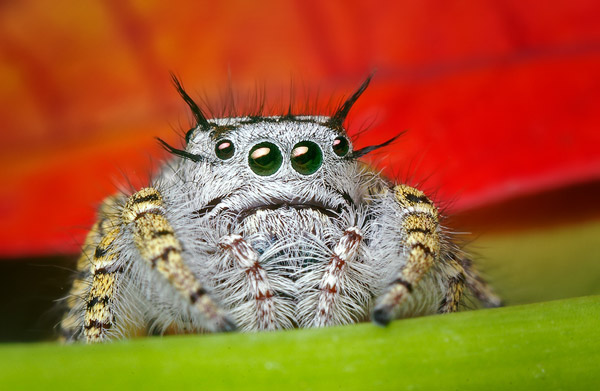
Jumping Spider
Photo by Opo Terser via villageofjoy.com

No, I know; you thought "web of intrigue" was just a neat catchphrase. But every time a secret is born, a spider emerges from the shadows. It bears the secret, holds on to it, nurtures it and draws strength from it.

When a spider is killed, the secret is lost. If it is destroyed in a single strike, someone, somewhere, gains the knowledge of the secret that it bore. If it is consumed, the being that consumed it will learn its secret. Portions of a dead spider's secret may be recovered and extracted from the pieces of spider that are not obliterated; a shoe striking a small house spider is likely to wipe out most of the secret - if one is lucky, the words "Fahd, the bak-" might be extracted from the legs that were not crushed. On the other hand, giant spiders slain by murderous rovers armed with pointed, and not crushing, weapons might be able to recover more details. And it is often said that the scope of the spider matches the scope of the secret...

The nature of the spider is rumored to have some relation to the type of secret that it bears. Jumping spiders bear secrets of individuals, while those that spin webs bear secrets that touch upon multiple parties. Sages have debated the significance of the number of strands or the size of the web, but no conclusions have been reached.
"Queen of the Demonweb Pits," Justin Gerard

This entire discussion has obvious relevance for some traditional D&D groups, particularly those that might, for instance, have societies based around spiders and place a high premium upon noble intrigues.

In such societies it is considered taboo to harm a spider. Rather than a piece of vanity on the part of a Spider Goddess, however, this is practical advice in the great game of the noble houses. Destroying a spider means that the secret is lost; seducing a spider means that you might be able to convince it to give up its secret. Of course, you'd have to give it a new one in exchange - namely, another spider for it to devour. Gifts of spiders between noble houses are not uncommon - in some cases, they are the secrets of others, traded back and forth, while in others they are secrets of one house being given as a sign of good faith.

The Spider-tailed Adder, whose tail mimics the motion of a spider to attract prey, raises some tantalizing issues... (h/t to Jensen for this one)

Thursday, July 4, 2013

Monster: Dhees

Dhees, also known as "sniders", are horrendous creatures that skulk about the edges of the Zone. Giant serpents with four spider-like legs and a multitude of eyes, they seek large prey - horses, camels, and of course humans.

The dhees usually strikes from a cave or a burrow that it has dug, gaining momentum for its lunge by digging its spider legs into the terrain before surging forward.

It can of course be read like a book, and is said to contain knowledge about the Zone and its properties.

Snider art by Claudio Pozas, from here

Dhees
No. Enc.: 1
Move: 120' (slithering, plus generates momentum with spider legs)
AC: 5 (15)
HD: 8
Atk: 2d6 (talons) / 1d6 (fangs, poison) - both attacks are directed towards the same target
Morale: 9
XP: 920

Lunge: Can dig its spider legs into the surrounding terrain to speed its lunge forward. It will hold off attacking for a round to position itself carefully. The lunge is at a +3 to hit, but next round it is at -1 to hit and to AC as it's getting back into position.

Poison: If stung, save vs poison. Pass: take disadvantage on all actions for d6 rounds. Fail: Paralyzed for 1d8 turns. Onset time is 1-2 rounds in either case.

Motion Hunter: The snider relies on vibration and movement to track its prey. Characters may make Dex checks with disadvantage in order to freeze and not attract its attention. Loud bangs or vibrations have a chance of disorienting the creature.

Thursday, December 6, 2012

Blooderfly

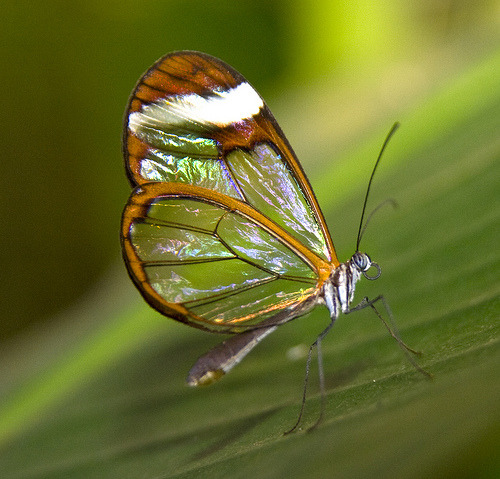
This guy was originally called the Crystal Butterfly, but after some PCs encountered it, they dubbed it the Blooderfly instead.


Like this, but no amber in the wings.
Oh, and with a 30 foot wingspan.

Blooderfly

Big-ass butterfly (30' wingspan) with crystalline wings that glitter beautifully. Too bad it's trying to drain your blood. 

No. Encountered: 1
Movement: 120' 
AC 5
HD 5
Attacks: Blood drain - gaze attack 2d6 dmg, save vs pet/poly for half damage. Blood comes out of someone's body in a thin red mist, goes into the butterfly's wings and makes them a nice pink. 
Balefire - After 3 successful drains, it can fire a balefire blast from its antennae - HDd8 blast damage in 20' radius, save vs BW for half, it's immune to its own blast. Balefire can sometimes generate/cause illnesses. 
Defenses: The Crystal Butterfly is immune to clerical magic, being a creature of the Bieth.
Morale: 8
XP: 5 HD: 800
6 HD: 1320
7 HD: 2040